
Nutsumaat
A Hul’qumi’num word also used by SENĆOŦEN speakers to describe the way good work happens: "together as one", towards the same goal. WildlifeStewardship.ca believes that support from all partners is essential for sustainable ongoing stewardship.


Projects
With decades of combined experience, our team safely and humanely manages a wide range of targeted species using proven tactics and specialized equipment suited to both remote and urban settings. Our goal is to keep every operation safe, humane, and efficient.
Fully permitted, insured, and fluent in the regulatory process, we handle complexities so that projects move forward smoothly.


Digital night vision
Thermal night vision


Advocates for a Salish Sea free of goats and fallow deer
After prioritizing human and animal welfare, adhering to the principles of eradication is our highest objective. We have invested thousands of hours working discreetly to reduce introduced and invasive goats and fallow deer from multiple Gulf Islands.
With the appropriate permits and approvals in place, we use a range of low-impact, humane techniques, including capture corrals, herding dogs, bait stations, and night operations. These methods allow us to remove entire herds efficiently without educating the remaining animals or relying on firearms.
Where possible, we support relocation efforts. For example, we have facilitated the transfer of ferrel goats to organizations that use these goats for invasive plant management, such as clearing land of brambles and consuming fuel to help reduce wildfire risk.
Why a goat and “Fallow Free Salish Sea” free matters;
Our team continues to work diligently and discretely removing both goat and fallow deer. These introduced species cause significant ecological damage to the Salish Sea ecosystem, particularly through overgrazing.
Their impact is especially severe on:
-
Camas meadows
-
Garry oak ecosystems
-
Coastal Douglas-fir ecosystems
These ecosystems are among the most fragile and ecologically significant in British Columbia:
-
Coastal Douglas-fir ecosystems make up just 0.3% of B.C.’s land base, yet support the province’s highest plant diversity, the greatest number of species at risk, and the highest diversity of overwintering birds in Canada.
-
Garry oak ecosystems and camas meadows are critically endangered and found in Canada only within the Salish Sea region. Less than 5% of Garry oak ecosystems remain in their natural state. They support numerous species at risk and hold deep cultural significance for Indigenous communities.
-
Feral goats have established themselves across several Gulf Islands, where their agility lets them access steep, rocky terrain that other grazers can't reach. Left unmanaged, they strip vegetation down to bare ground, accelerating erosion and outcompeting native species for forage in some of the most ecologically sensitive habitat in the Salish Sea.
Captured and re-homed invasive goats
Invasive Fallow deer via thermal drone
A Holistic Approach to Restoration
Our work goes beyond animal removal. We are committed to a holistic land management approach that addresses both invasive fauna and flora.
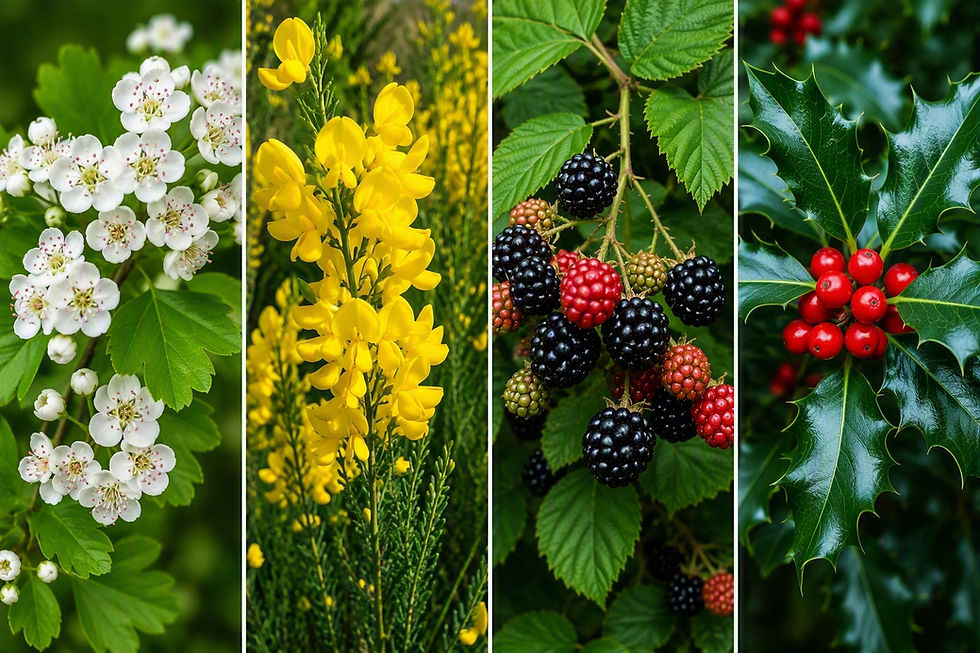
In addition to reducing overbrowsing by ungulates, we actively manage invasive plant species such as:
-
Hawthorn, Scotch broom, European Blackberry, Holly, and Ivy.
This integrated approach creates the conditions needed for traditional and medicinal plants to re-establish and naturally outcompete invasive species over time. With guidance from local knowledge holders we foster biodiversity that has many benefits such as understory moisture retention that lowers the risk of wildfire.


Contact us
If you’re interested in our services or you want to
learn more, we’d love to hear from you.